
The question mattered intensely when war memorials were built, and in a changing political climate where symbols are increasingly used to promote ideologies, it should matter now.
When Glasgow’s George Square opens again, enjoying a glass of wine from one of the bars surrounding the golden Christian cross on Glasgow’s Cenotaph, might invite the complex notes of full-bodied Christian nationalism, a mid-palate of Orange Walks and a lingering finish of Christian Crusades.
Garry Otton
After the First World War, a makeshift memorial of wood and plaster with a coffin on top served as the original Cenotaph in Whitehall. It was buried in millions of flowers and wreaths before Prime Minister Lloyd George ordered something more permanent from the most famous British architect of the time, Edwin Lutyens.
Before the Great War, many churches and cathedrals housed memorials to wealthy commanders and officers who had fallen in combat, but it was almost unique to create a monument for common soldiers and sailors who had died far from home. Memorials for the Crimean War (1853 – 6) in St James’s in London and the Second Boer War (1899 – 1902) in Glasgow’s Kelvingrove Park, broke new ground. And, lest we forget: despite most memorials featuring Christian crosses, many who gave their lives were not Christian.
Like Prime Minister Lloyd George who insisted on the absence of religious symbolism, Edwin Lutyens wanted a secular memorial that honoured victims “irrespective of creed or caste” and argued with church leaders who were demanding to see a cross. He objected to “the inherent cruelty of the forced Cross” in the face of the diverse Indian, African, Jewish, and Muslim soldiers of the British Empire who also died in the war. He called his memorial a ‘Cenotaph,’ an Ancient Greek word that pre-dated Christianity describing an empty tomb of a missing warrior. The word was all but extinct in English until Lutyens revived it.
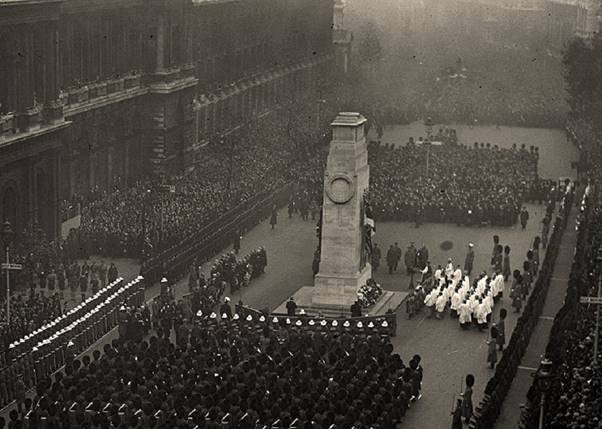
In designing the Cenotaph, Sir Edwin Lutyens was heavily influenced by his wife. Lady Emily had a passion for theosophy and pantheism which deeply influenced the mystical, non-denominational dimensions of London’s Cenotaph. The outcome was a monument that visualised equality and diversity among those who fought and died and prioritised universal truth and brotherhood over Christian dogma.
Lady Emily was a member of the Moral Education League, opposed sex work and visited ‘lock hospitals’ to assist women who had been forcibly imprisoned with sexually transmitted diseases. Though she championed women’s suffrage alongside her militant sister, Constance, Emily rejected the movement’s growing militancy and opposed the presence of lesbians in the suffragette movement. Furthermore, she aggressively supported Indian independence at the exact moment her husband was designing New Delhi as a crown jewel of British imperialism. Her most enduring legacy began in 1911 when her friend Annie Besant brought the young Jiddu Krishnamurti to England to be groomed as the Theosophical movement’s celibate ‘World Teacher’ or ‘Chosen One.’ Emily became his surrogate mother and most devoted follower, touring the world with him through the 1920s in the belief that he was the new Messiah. Krishnamurti eventually broke away from the cult in 1929, famously declaring that “truth is a pathless land.” Behind his public persona of a celibate guru, over many years, he engaged in a secret romantic affair with Rosalind Rajagopal – the wife of his business manager. There followed a series of bitter lawsuits with his manager over the foundation’s property and intellectual copyrights that wasn’t settled until 1986.
After the First World War, the Cenotaph in London served as a mass grief site, with flowers, wreaths, and public participation lasting for many months. There had been up to 750,000 UK deaths (excluding Ireland) and over one million from the Empire. 2 million had been wounded in the UK with 40,000 amputees and 77,000 with severe facial disfigurements and blindness. Indian forces lost 72,000 personnel, Australian 62,000, Canadian 60,000 and New Zealand 18,000. 204,650 bodies were moved to cemeteries between 1918-1921. Many bodies were unidentified. So many friends and families had no grave to lay flowers.
The 1919 Peace Parade and Armistice Day ceremonies involved troop formations, salutes, wreath-laying, and a two-minute silence.
Processions and ceremonies drew large crowds, with estimates of over a million passing the Cenotaph and 500,000 entering Westminster Abbey over several days. Over 100,000 wreaths were laid, reaching ten feet high.
Men developed the custom of doffing hats as they passed the Cenotaph, but it was a practice that faded in the 1930s.
But there was still one section of the establishment that was not happy with Lutyens’s Cenotaph, reflecting the diversity of those who sacrificed their lives with the simple words ‘The Glorious Dead’ written across the Portland stone. In 1920, the Church of England tried to lead a backlash, bemoaning the absence of Christian inscriptions, crosses and prayers. The Catholic Herald called it a “pagan monument” unfit for a Christian country.
Prime Minister David Lloyd George and the government also rejected the idea of a tomb for an unknown warrior, favouring a secular, imperial symbol, but, supported by the Dean of Westminster, Herbert Ryle and King George V, the Church won the day, placing a tomb in Westminster Abbey. Despite protests, the inscription on the tomb was Christian, with the phrase: ‘In Christ shall all be made alive’ and: ‘They buried him among the kings, because he had done good toward God and toward his house.’ The main text made it clear who this poor man of unknown faith gave his life for with the largest space left: ‘FOR GOD.’
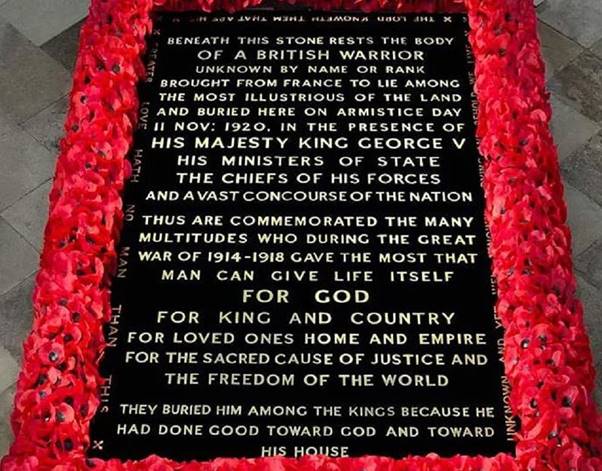
The annual ‘Remembrance Sunday’ ceremony at the Cenotaph, from its unveiling in 1920, included Christian rituals led by bishops with prayers and mentions of Jesus Christ. Representations from other faiths were forbidden.
Between 1921 and 1923 the public rebelled against official remembrance ceremonies being held in Westminster Abbey. Working-class communities and veteran groups viewed the highly formal, state-funded ceremonies led by the Church and political elites, high-ranking military officials and royalty an extravagant distraction from the misery of the living. The slogan ‘Honour the dead – remember the living’ became a popular rallying cry. In a famous 1922 protest organized by the National Unemployed Workers’ Movement, an estimated 25,000 unemployed veterans marched on the Cenotaph and Westminster Abbey. Instead of wearing their military medals, they pinned pawn tickets to their coats to show they had been forced to pawn their bravery awards just to buy food.
The two-minutes silence on the 11th day of the 11th hour of the 11th month, when the Armistice Day ended the First World War, remains without priests, prayers, or mandatory religious dogma. As for the ceremonies at the Cenotaph in London, not until 2000 were other faiths included in the memorial service and not until 2018 could someone of no faith – a Humanist – formerly attend.
With such a catastrophic loss of life during the First World War, the public began turning its attention away from Christianity to embrace new beliefs like Spiritualism which gained massive support from the bereaved. In 1928 the Albert Hall was filled for a service which included mass communication with the dead. Other beliefs that were also gaining prominence at the time included Theosophy (a blend of western occultism and Eastern religious ideas,) Buddhism, Hinduism and Mohammedanism (Islam). The latter changed its name when it became clear how the title was as offensive as calling Christianity ‘Jesusism.’
Jealously guarding its exclusive rights to spiritual truth, the Church of England viewed these mystical and eastern influences as rival doctrines. Although many churches have embraced more liberal values, in the face of decades of decline in Christian belief, various Christian cults and branches have instead become more orthodox, retrenched, political and sometimes vociferous.
Efforts to move remembrance services from the Cenotaph to a more Christian setting at Westminster Abbey faced resistance in the 1920s as the church was seen as part of the establishment. In 1921 the government responded by swapping the choir singing hymns at the Cenotaph with a military band.
Attempts to be more inclusive in 1968, the ceremony’s fiftieth anniversary, saw a backlash from the Anglican Evangelical Alliance, but despite such resistance, a more multi-faith approach emerged over time.
That tension between secular mourning and religious ownership wasn’t confined to Whitehall. It travelled into local memorials and to Scotland where civic pride, imperial loyalty, Protestant and Catholic symbolism and public grief were compressed into stone, bronze and regimented ceremony.
Thankfully, in more recent times, there has emerged gentler reminders of lives lost in war, and ones that better chime with the veterans, families and friends who wanted the church and authorities to focus more on the living. Perhaps we can look at a few of these war memorials before we move on…
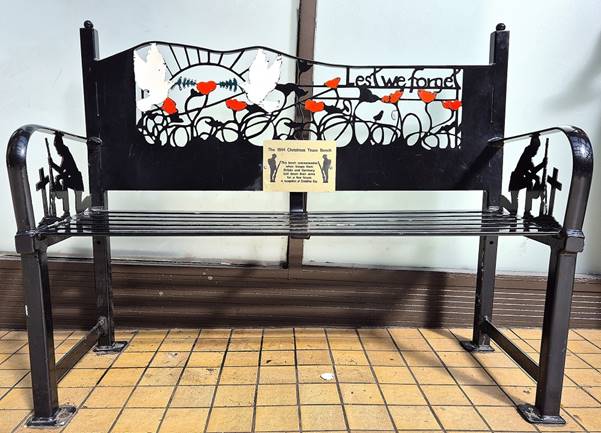
Beginning with one of the more useful, tucked away in Glasgow’s Central Station, there’s a beautiful wrought-iron, sculpted bench laced with poppies commemorating troops from Britain and Germany who laid down their arms for a few hours in recognition of Christmas Day. The Christmas Tree Bench serves as a perfect reminder of those who gave their lives in the First World War. Quiet and unassuming. A relief for tired feet, a moment to rest and reflect. Never demanding of attention. But always there.
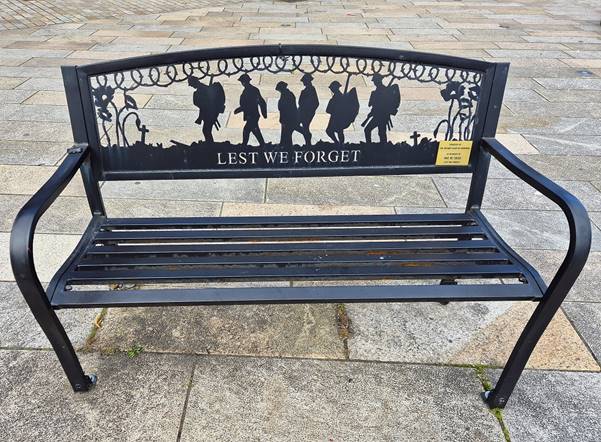
There is another memorial bench in the centre of Renfrew installed by Renfrew’s Rotary Club next to the town’s mercat cross-style war memorial.
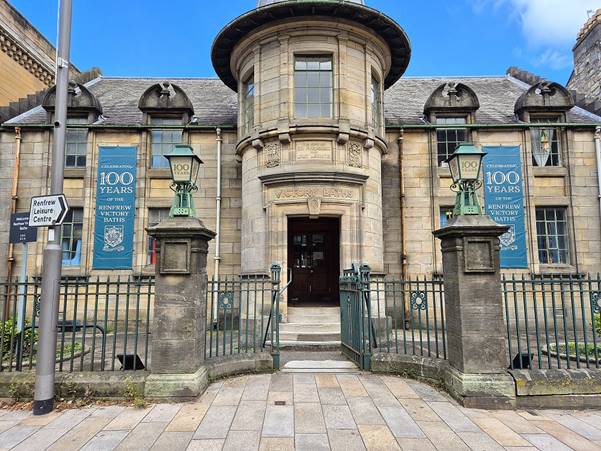
Another example of a useful memorial is the Renfrew Victory Baths. These Edwardian swimming baths were gifted to the Royal Burgh of Renfrew in 1921 by prominent local shipbuilder Sir Fred Lobnitz and his wife as a practical gift that actively benefited the health and daily lives of local families and future generations, rather than just a static monument. The building remains a functional public swimming pool and houses a commemorative wooden panel listing local soldiers who made the ultimate sacrifice.
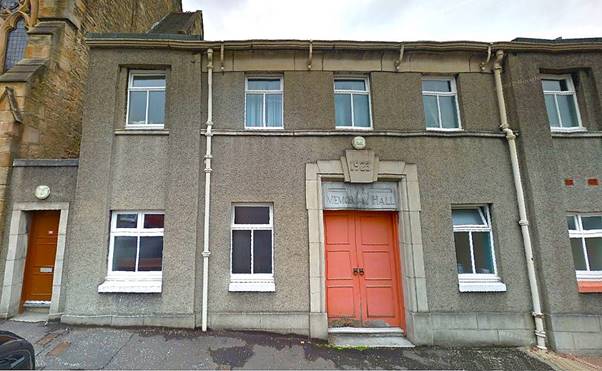
Serving as a community church space is the Mount Florida Parish Church War Memorial Hall. This Church of Scotland property was later sold to the Church of Pentecost Scotland, an anti-LGBT+ church that believes in tithing, divine healing and speaking in tongues. Ironically, the forefathers of the largely black congregation would have themselves been victims of the British Empire missionaries exporting Christianity to an Africa that had traditionally embraced none-traditional expressions of sexuality from those recorded in pre-historic cave drawings to later kings and queens. (King Mwanga II, monarch of the Baganda people in Uganda, was known for his sexual relations with his male subjects and a warrior woman from Ndongo kingdom of the Mbundu, dressed as a man and surrounded by a harem of men dressed as women, ruled as a king.)
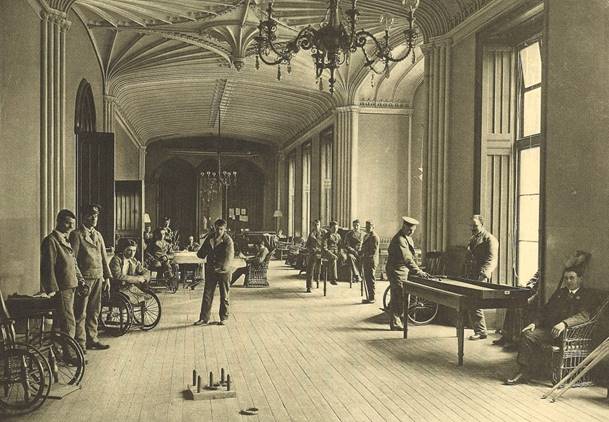
The Princess Louise Scottish Hospital for Limbless Sailors and Soldiers, (later Erskine Hospital and now the Erskine Veterans Charity,) was also a Scottish war memorial that reminded us of the lives sacrificed whilst serving a very essential purpose for the living.
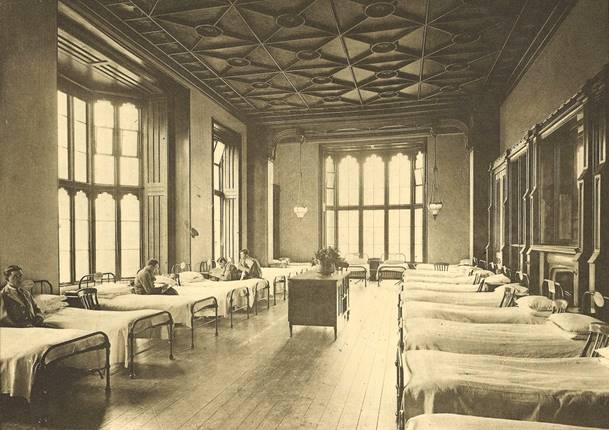
Marble war memorial plaques housed in the former Church of Scotland parish church in the village of Burghead in the West Moray Presbytery were not so lucky. The church was converted into a Scotmid supermarket, and they had to be moved to an alternative site.
Less functional but the most famous of Scotland’s war memorials is Glasgow’s Cenotaph. It is an imposing structure that blocks your view of the opulent, granite, Beaux-Arts City Chambers in George Square like a concrete support in a parking lot! It drew much criticism when it was built in 1924. Several pre-existing historic monuments dedicated to Queen Victoria, Prince Albert, and William Gladstone had to be shuffled around, evoking the ire of traditionalists who thought the local council were vandalising the square. Letters to the Glasgow Herald lamented that the monument would block the majestic frontage of the city’s finest civic building.
The building behind the Cenotaph, Glasgow’s City Chambers, was meant to reflect Glasgow’s status as the ‘Second City of the Empire’ with a triangular stone pediment celebrating Queen Victoria’s Jubilee. When she opened the building in 1888, the facade depicted her enthroned at the centre, flanked by allegorical figures of the UK home nations – Scotland, England, Wales, and Ireland – while representations of global colonial subjects occupied the outer edges bringing gifts and paying homage. Britain’s mission was to educate and ‘civilise’ the Empire with the aid of Christian missions like the Church Mission Society (CMS) and Society for the Propagation of the Gospel (SPG.)
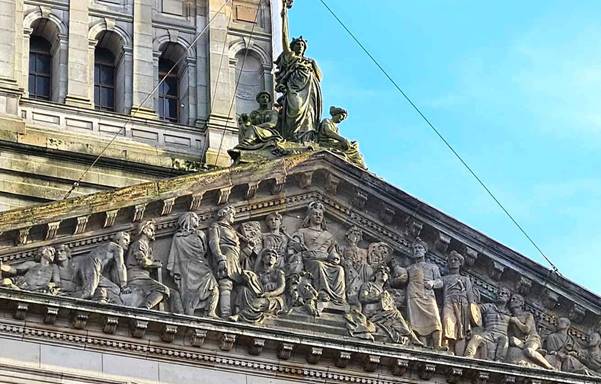
In a political landscape muddied by a complex web of personal rivalries and family alliances among her royal descendants, Queen Victoria looked down on Glasgow’s George Square where, in 1914, volunteers queued to enlist before being sent to the Front. Around 200,000 Glaswegians served in the First World War with approximately 182,000 returning home, many with catastrophic injuries or psychological damage to take their final salute and join the ranks of the poor, unemployed and homeless in a wrecked economy after the UK had demobilised its military and industry.
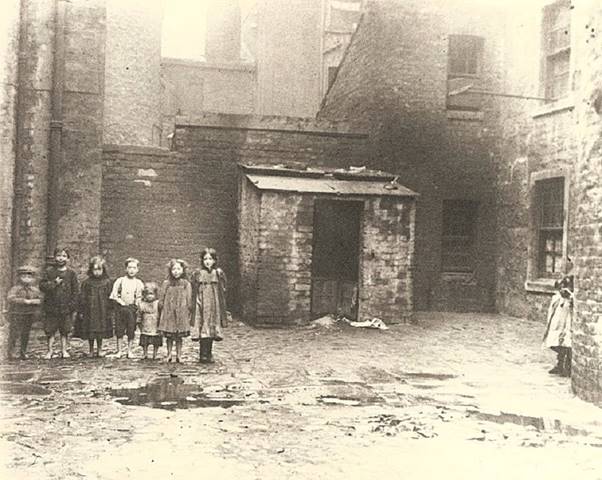
At a time when around 11% of property owners were speculating on empty properties and many landlords demanded a year’s rent up front in overcrowded slum tenements, Glasgow was the centre of campaigns like the Glasgow Rent Strikes from early as 1915 as around 30,000 tenants fought 25% rent hikes and evictions enforced by landlords and factors often targeting families whose men had gone to fight in the war. The Glasgow Women’s Housing Association – or ‘Mrs Barbour’s Army’ as some called it – blew their whistles and drew on the help of neighbours to fight the factor’s men. War veterans began aligning with left-wing strikers before a terrified government was forced to intervene and freeze rents to pre-war levels. This was only the start of a period of discontent that would see the establishment – which included the Church – a target for public anger.
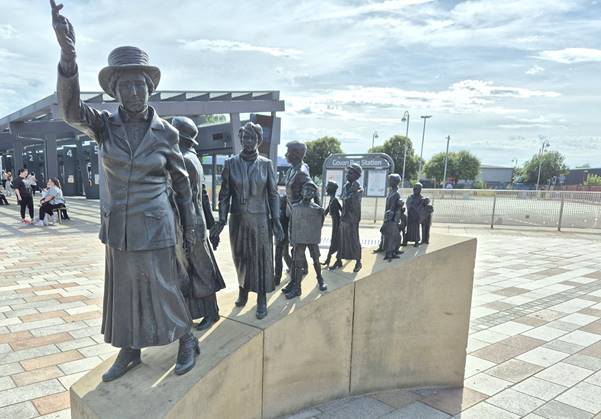
The Independent Labour Party’s May Day Manifesto of 1918 had called for ‘A Living Wage for all and Justice for our Soldiers and their Dependants.’ By the following year there were calls for a 40-hour strike for a 40-hour week which led to the Battle of George Square which saw the deployment of military troops in George Square. The leaders of the Clyde Workers’ Committee were arrested in 1919 and imprisoned under the Defence of the Realm Act.
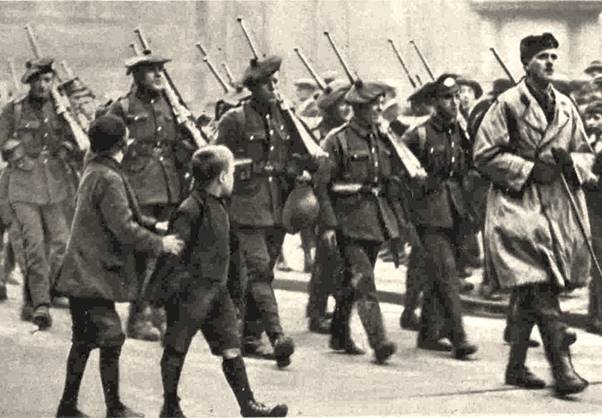
At a time when unemployment grew and riots erupted across the country, stories circulated that foreigners were stealing jobs and housing. In January 1919, rumours circulated around Glasgow that black sailors were “being given the preference in signing on for a ship about to sail.” Instead of going after ship owners taking advantage of cheap labour, thirty African sailors were chased through the streets of Glasgow by a crowd of hundreds.
The media responded disparagingly to the radical left using words like ‘Red Clydeside.’ Only months after the Russian Revolution, the establishment feared a full-scale revolutionary alliance here.
In 1919 after the Great War, crowds had gathered in George Square around a wooden Christian cross to honour those lives lost. It was here, a year later in 1920, that the Lord Provost held a public meeting to announce plans for a permanent war memorial of ‘artistic design.’
Already across the country there was a backlash against the civil elite squandering money on a proliferation of “morbid” stone statues to commemorate the dead.
Glasgow’s War Memorial Committee purposely excluded Labour politicians, trade unions and working class representatives from the committee to ensure the memorial wouldn’t reflect socialist or pacifist sentiments, but appeased the protesting working classes by spending some of the funds on charities helping the veterans: some on the Cenotaph and some on the Prince Albert Memorial Workshops to train disabled sailors and soldiers at Killearn Street in Possilpark. The workshops were named after Prince Albert, later to become King George VI after he wrote to the war memorial committee suggesting they might work on this new Glasgow memorial. The workshops were built in 1905 for homeless men offering them training in such trades as French polishing, furniture making, upholstering, carving, wood machining and shoe making. When this opened after the war in 1919, Prince Albert was welcomed by a guard of honour and the 2nd Battalion Royal Scots and shown around by the Lord Provost and Colonel Smith Park who headed the workshop’s committee. The future king was presented with a carved cigar and cigar box made by the men from the woodwork department.
A few years later, in 1923 the workshops were sold to drink manufacturer, Schweppes.
The inherent patriotism of a grand military monument was seen by Glasgow Corporation – then dominated by a coalition of anti-socialist parties known as the Moderates – as a tool to disadvantage and counter socialist agendas. By framing the narrative around collective British national sacrifice and imperial loyalty, the local government sought to pull working-class focus away from class warfare and redirect it toward civic duty.
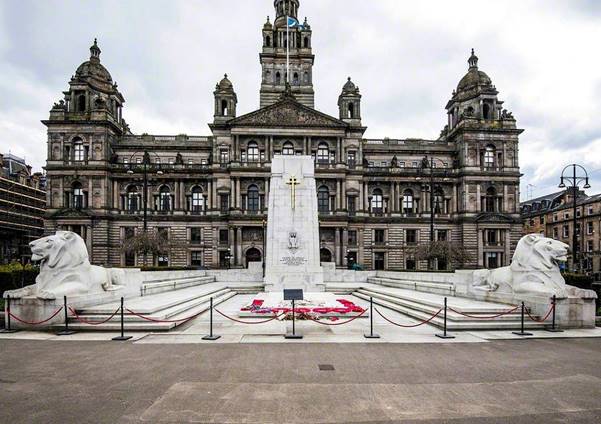
By erecting the Cenotaph directly in front of the City Chambers, the Corporation successfully politicised the war memorial and re-sanctified George Square as a patriotic space. They shifted the area’s identity from a site of anti-government revolt to ‘hallowed ground’ dedicated to the British military state.
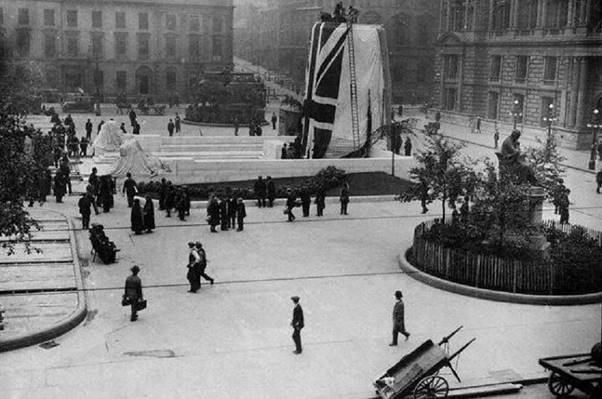
Starting in 1925, the Corporation supported massive joint parades by the British Legion and the Combined Regimental Association. These spectacles filled George Square with military pageantry, patriotism, and establishment figures. By institutionalising these remembrance rituals around the Cenotaph, the Corporation successfully crowded out radical political demonstrators who would have thought twice about protesting at a memorial for the victims of war.
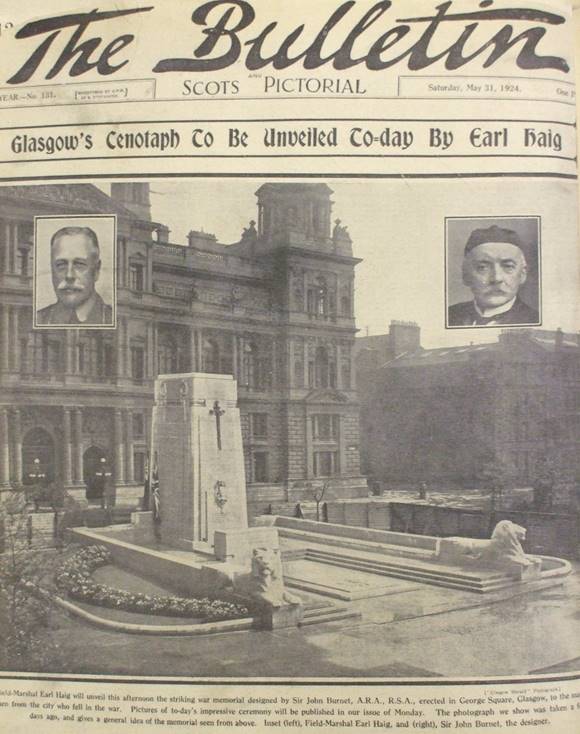
Glasgow’s War Memorial was designed by Glaswegian architect Sir John James Burnet as a squat obelisk flanked by lions to accent the ‘Great Britishness’ of it all. The Glasgow Cenotaph was unveiled on 31 May 1924 by Field Marshal Douglas Haig attended by crowds estimated at around 100,000. Over 60 women had to be treated for fainting and hysteria. Local clergy then offered prayers, dedicating the site as a permanent memorial to Glasgow’s World War I dead. It has been a Category B listed building since 1970 for its architectural and historic interest.
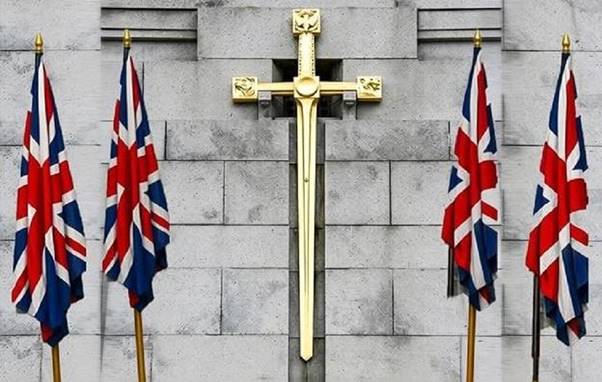
Unlike Edward Lutyens’s secular war memorial in Whitehall, Glasgow’s Cenotaph flew in the face of non-Christians and atheists who gave their lives in the war. A bronze sword, gilded in gold leaf, mimicking a Christian cross adorn the front. Despite some mealy-mouthed explanations that the sword pointed downward represented martial valour and peace, it fools almost no-one: It is unmistakenly a Christian cross. On its website, The Commonwealth War Graves Foundation offer a somewhat baffling explanation on the use of these swords in the cemeteries on the Somme. “The Commonwealth War Graves Commission wished to have something in their sites that would reflect the faith of the majority of soldiers buried in the war cemetery. With its Christian cross shape, the Cross of Sacrifice does just that… Although the cross is a Christian symbol, the Cross of Sacrifice is specially designed so that it can be symbolic to soldiers and visitors of all faiths and religions.”
By placing a cross on the war memorial likens the struggle of the soldiers to a crusade and their sacrifice to the good of mankind, like that of Jesus. Burnet suggested that “the (Glasgow) monument should not only express grief for the fallen but the spirit of sacrifice and achievement.”
The altar-like monument in George Square also features a sculpture of St Mungo, the patron saint of Glasgow, in front of the city’s coat of arms and biblical inscriptions carved in stone and raised lead letters. On the south face it reads: “Greater love hath no man than this, that a man lay down his life for his friends,” from John 15:13, and on the west face there is: “Their name liveth for evermore,” adapted from the Apocrypha, Ecclesiasticus 44:14. The north face carries the simple words: “These died in war that we at peace might live. These gave their best so we our best should give.”
The Chair of the Scottish Secular Society, Neil Gregory has asked: “Who exactly did God save? And can we categorically state that all those who gave their lives in war were Christian? If not, there can be no reason for such a public war memorial having a Christian cross.”
Soon there would be crosses popping up all over the place on memorials reminding the public of those of all faiths and none who gave their lives. The Govan War Memorial used a Mercat Cross opting for a lion instead of the traditional unicorn in a nod to the Union. This too incorporated a Christian cross thinly disguised as a sword on its base.
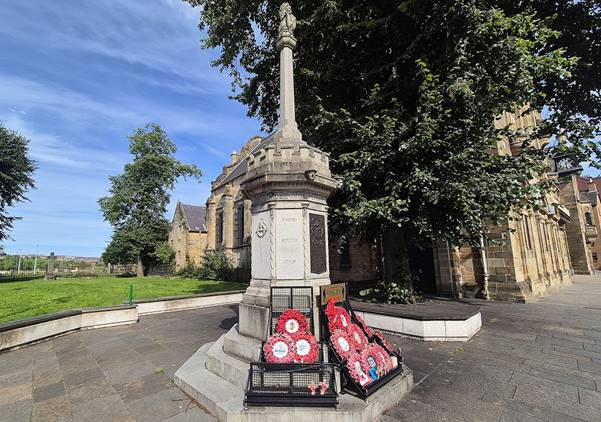
A Celtic Cross was used at the memorial at Burgh Hall in Pollokshaws and for the Dassie Green War Memorial in Glasgow Green honouring the officers, NCOs, and men of the 7th (Blythswood) Battalion, Highland Light Infantry.
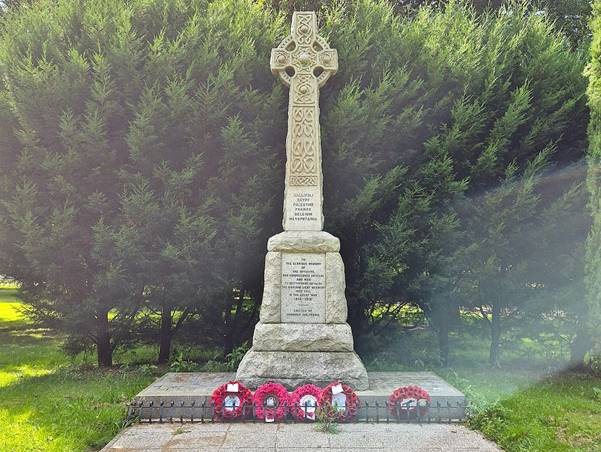
Specifically, for fallen soldiers of the Catholic faith, the war memorial at St Mary Immaculate (St Mary’s & Holy Name) Roman Catholic Church on Shawhill Road, Glasgow was perhaps less appealing to the cultural Catholic as to the very pious and devout, featuring Jesus nailed to the cross flanked by His favourite disciple and His mother.
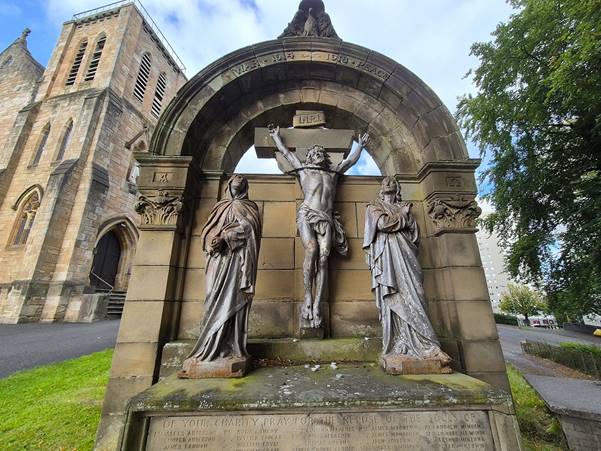
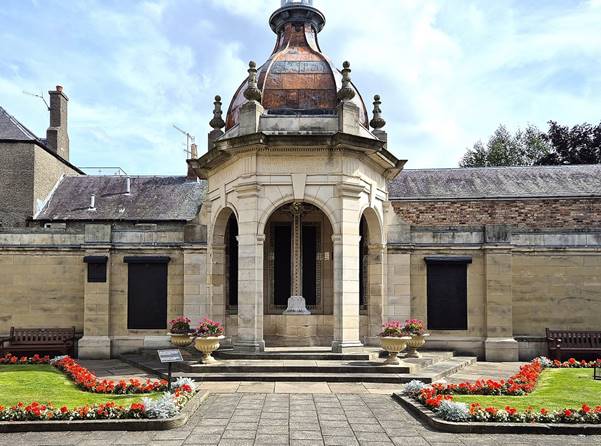
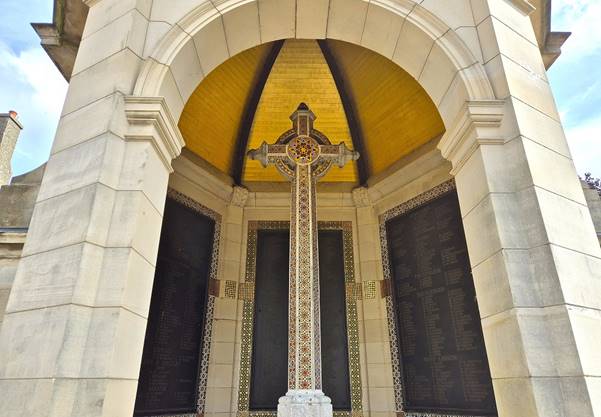
For extravagance, the ogee-domed Renaissance pavilion for the 541 casualties of the Great War in Peeblesshire presents almost like a nouvelle cuisine dish at a Michelin star restaurant! Competition winner, architect Burnett Orphoot proposed in 1919 a war memorial with a cross made of the rare Sicilian Billiemi marble “enriched with mosaics in the colours of those of the Cathedral of Monreale at Palermo” covered by a baldacchino (a stone canopy) coated in copper. He added: “By the use of copper in the canopy and the introduction of the rich Saracenic mosaics on the cross, it is hoped to get a bright note of colour which is otherwise lacking in the surroundings.” The bronze name panels were made by the Bromsgrove Guild of London. Replication of the 12th century Moorish-Byzantine mosaics from Sicily were designed by Professor Giuseppe Matranga of Palermo. As a finishing touch, a giant stylised stone lamp burns as ‘the eternal flame.’
The pleached lime trees, planted to obscure the buildings at the back of the monument had to be removed by 1953 as the walls were not weathering as well as the costs had promised.
In a public space and not necessarily intended for just Christian soldiers, Glasgow’s Cenotaph with its prominent Christian cross has frequently served as a meeting and assembly point for the Protestant Orange Order and allied loyalist groups.
During Black Lives Matter demonstrations of 2020, hundreds of individuals associated with groups like the Loyalist Defence League (LDL) gathered in George Square to ‘protect’ the Cenotaph from protesters and vandalism.
Unpopular Loyalist marches have consistently been a challenge to Glasgow City Council that would prefer to project an entirely different image of the city. On the weekend of 14 September 2019 there were five Loyalist and one Irish Republican parade planned in the city: The Republican Network for Unity, Bridgeton Protestant Boys Flute Band, Pride of the North Flute Band and two marches from the Whiteinch Orange and Purple District. On the Sunday they were to be joined by the Partick Orange and Purple District. After an emergency public processions committee meeting, they ruled that the six parades would be prohibited following advice from Police Scotland. More than a thousand Loyalists, backed by members of the Orange Order descended on Glasgow City Chambers in front of the Cenotaph to protest the council’s ‘illegal’ banning of marches.
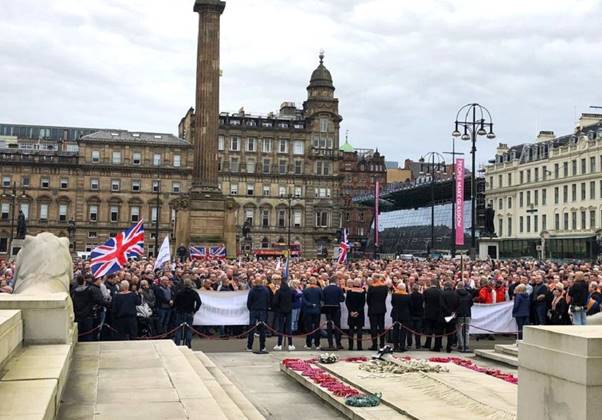
During the Scottish referendum on Scottish independence in September 2014, rioting broke out close to the Cenotaph as Union Jack-waving unionists went on the rampage through the Merchant City even though they had won. Trouble flared when several people draped in union flags arrived and sang “Rule, Britannia!” A flare was set off with mounted police separating the two sides. There were 20 arrests.
Now in Glasgow 2026, after spending £20 million-pounds, George Square has been refurbished into a greener, modern area with new lawns, trees, and benches. But in a nation where the 2022 census saw only 38.8% (and falling) of the total population defining themselves as Christian, the Cenotaph with its Christian cross remains.
Glasgow’s war memorial still performs the patriotic work it was built to perform, but in an age of far-right mobilisation, social-media division and imported culture wars, the sight of Christian crosses and Union Jacks gathered around a civic space of mourning feels increasingly removed from the reason so many Scottish men gave their lives.
Garry Otton 2026. (Author of ‘Religious Fascism’ (The Repeal of Section 28) and co-founder of the Scottish Secular Society.
Further reading: –
Furious reaction as new memorial bench damaged after only 10 days.
Glasgow Centotaph. (Grokipedia.)
Peebles War Memorial. Peeblesshire News.
‘An Affair of the Soul’, (pdf.) Colin Blair.
Remembrance Sunday: call for Church of England to ditch Cenotaph role.
The Cenotaph was designed as a symbol of multi-faith (and atheist) unity, Matt Ridley.
Scotmid row over former church’s war memorials.
Hundreds turn out ‘to protect’ Glasgow war memorial.
George Square: Hundreds in Glasgow to ‘protect’ war memorial.
City Rally: Scots loyalist group gather in Glasgow’s George Square to ‘protect’ war memorial.
JD Vance attacks Europe over free speech and migration.
The Cross of Sacrifice. Commonwealth War Graves Foundation.